
The American Declaration of Independence, adopted on July 4, 1776, is one of the most influential political documents in modern history. By asserting that people possess inherent rights and that governments derive “their just powers from the consent of the governed,” it helped define modern ideas of popular sovereignty and limited government. Its language echoed in later struggles for liberty and national self‑determination, shaping debates about constitutionalism, equality before the law, and representative institutions across the world. Nearly 250 years later, the Declaration continues to be studied and debated as a landmark statement on freedom, human dignity, and the principles of self‑government
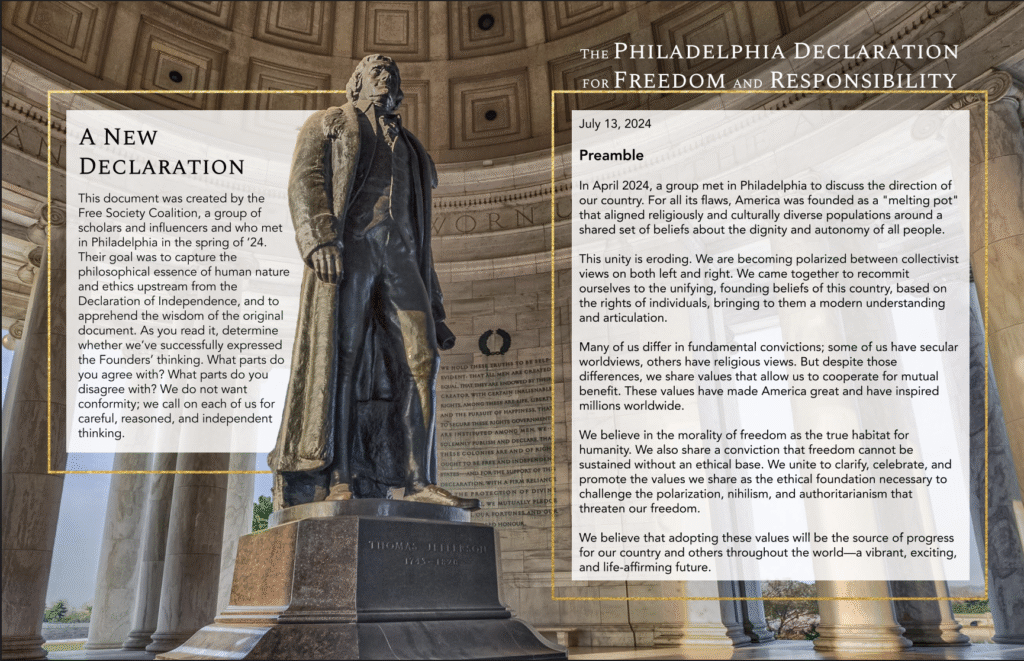
As the United States approaches the 250th anniversary of the Declaration of Independence in 2026, the Free Society Coalition is encouraging citizens to reflect on the principles that shaped the American founding and their relevance today. Guided by the Philadelphia Declaration, the Coalition promotes liberty, human dignity, individual responsibility, and civil discourse as essential foundations of a free society.
Founded in 2024, the Coalition brings together individuals and organizations from diverse backgrounds to foster civic education, constructive dialogue, and a deeper understanding of America’s founding ideals. Through educational initiatives, public engagement, and collaborative partnerships, it seeks to ensure that the nation’s 250th anniversary is not only a celebration of history but also an opportunity to renew the principles of freedom for future generations.
Declaration of Independence
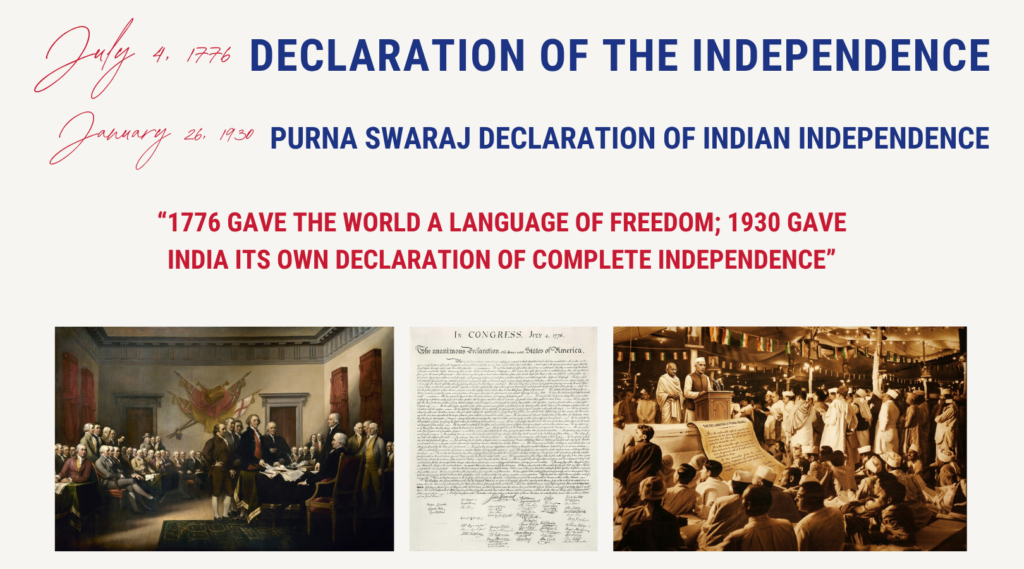
When representatives of thirteen American colonies adopted the Declaration of Independence on July 4, 1776, they did more than announce a break with British rule. They articulated a powerful set of principles: that people possess inherent rights, that governments derive their just powers from the consent of the governed, and that a people may alter or abolish a government that denies their liberty. These ideas quickly traveled beyond North America, entering a global conversation about freedom, self‑government, and political legitimacy.
Over the next century and a half, the language of rights and self‑determination inspired reformers, revolutionaries, and independence movements across the world. In India, the freedom struggle developed within its own historical, cultural, and political context, yet many of the same universal questions emerged: Who should govern? What gives a government legitimacy? And what rights belong to individuals and nations?
By the late 1920s, Indian leaders had grown increasingly frustrated with the limited constitutional reforms offered by the British Empire. Demands for greater autonomy gave way to a more fundamental claim, the right of Indians to govern themselves. In December 1929, under the presidency of Jawaharlal Nehru, the Indian National Congress met in Lahore and adopted the historic Purna Swaraj (complete independence) resolution.
The declaration that followed marked a turning point in India’s freedom movement. It asserted that the people of India possessed the same inalienable right to freedom as any other people and that a government that deprives them of these rights may justly be altered or abolished. language that consciously echoed the American Declaration. It also listed economic and political grievances against colonial rule and called on Indians to pursue self‑rule through collective, largely non‑violent action.
To give public expression to this commitment, the Congress designated January 26, 1930, as Independence Day, urging citizens across India to gather, hoist the national flag, and take a pledge in support of complete independence. Although formal political independence would come only on August 15, 1947, this moment made Purna Swaraj, the demand for full self‑government, the official objective of India’s national movement.
The journey from Philadelphia in 1776 to Lahore in 1930 is not a story of simple imitation but of ideas crossing borders and generations. The principles of liberty, rights, and self‑government were interpreted through different experiences and adapted to different societies. Yet both declarations shared a core conviction: that legitimate government rests on the consent of the people and that the aspiration to freedom is universal.
The Foundations of Democracy
Declarations of independence announce a nation’s political aspirations; constitutions create the framework through which those aspirations are turned into institutions. After winning independence, both the United States and India confronted the same fundamental challenge: how to translate revolutionary ideals into a durable system of government capable of protecting liberty, delivering justice, and governing diverse societies.
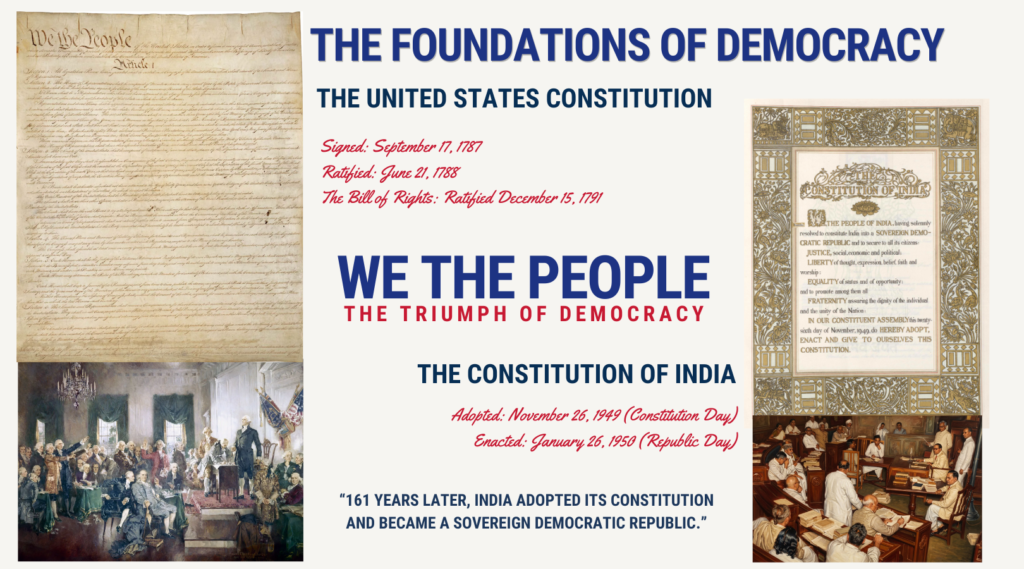
After the American Revolution, the United States framed and signed its Constitution in 1787, and it became the official framework of government when the ninth state ratified it in 1788. The Constitution established a federal system, separated powers among legislative, executive, and judicial branches, and embedded checks and balances to prevent the concentration of authority. The Bill of Rights, ratified in 1791, added explicit protections for freedoms such as speech, religion, and due process, helping to define the constitutional culture of the new republic.
More than a century later, India faced a similar constitutional task on a far larger and more complex scale. Following independence in 1947, a popularly chosen Constituent Assembly debated how to design democratic institutions for a country marked by immense linguistic, religious, and cultural diversity. After nearly three years of deliberation, the Assembly adopted the Constitution of India on November 26, 1949; it came into force on January 26, 1950, a date deliberately chosen to honor the Purna Swaraj declaration of complete independence made on January 26, 1930.
The drafting process was led by Dr. B. R. Ambedkar, Chairman of the Drafting Committee, whose constitutional vision profoundly shaped modern India. Ambedkar and his colleagues studied constitutional systems around the world, including the United States, and drew on comparative ideas such as fundamental rights, judicial review, constitutional remedies, and federalism, adapting them to India’s democratic needs and social realities.
Ambedkar insisted that political democracy must rest on social democracy. Reflecting this conviction, the Constitution does more than guarantee civil and political liberties; it also confronts entrenched inequalities by abolishing untouchability, prohibiting discrimination on grounds such as caste, religion, or sex, and providing safeguards and affirmative measures for historically disadvantaged communities. In his speeches, Ambedkar emphasized that liberty, equality, and fraternity had to become “a way of life” if Indian democracy was to endure.
Jawaharlal Nehru likewise recognized the wider constitutional tradition to which India was contributing. In 1946, his Objectives Resolution declared that all power in India must derive from the people and committed the future republic to justice, liberty, equality, and safeguards for minorities. principles that would guide the Constitution and echo themes of earlier democratic revolutions. On later visits abroad, Nehru acknowledged that India had learned from the experiences of other democracies, including the United States, even as it built institutions suited to its own history and social conditions.
The Constitution of the United States and the Constitution of India emerged from different centuries, contexts, and struggles, yet both grappled with the same core question: how can liberty be preserved through democratic government? Their enduring importance lies not only in their detailed provisions but also in their shared commitment to constitutionalism, representative institutions, individual rights, and the belief that free societies are strongest when power is limited by law and accountable to the people.
Indian Engagement with American Ideas: Education, Thought, and Democratic Inspiration
The influence of the American political experiment extended beyond abstract ideas; it became part of the lived experience of Indian thinkers, activists, and reformers who encountered the United States directly through travel, study, writing, and political engagement. By the early twentieth century, America had become an important intellectual and political space where Indian leaders could observe democracy in practice, engage with ideas of liberty, and present their own case for self‑rule on a global stage.
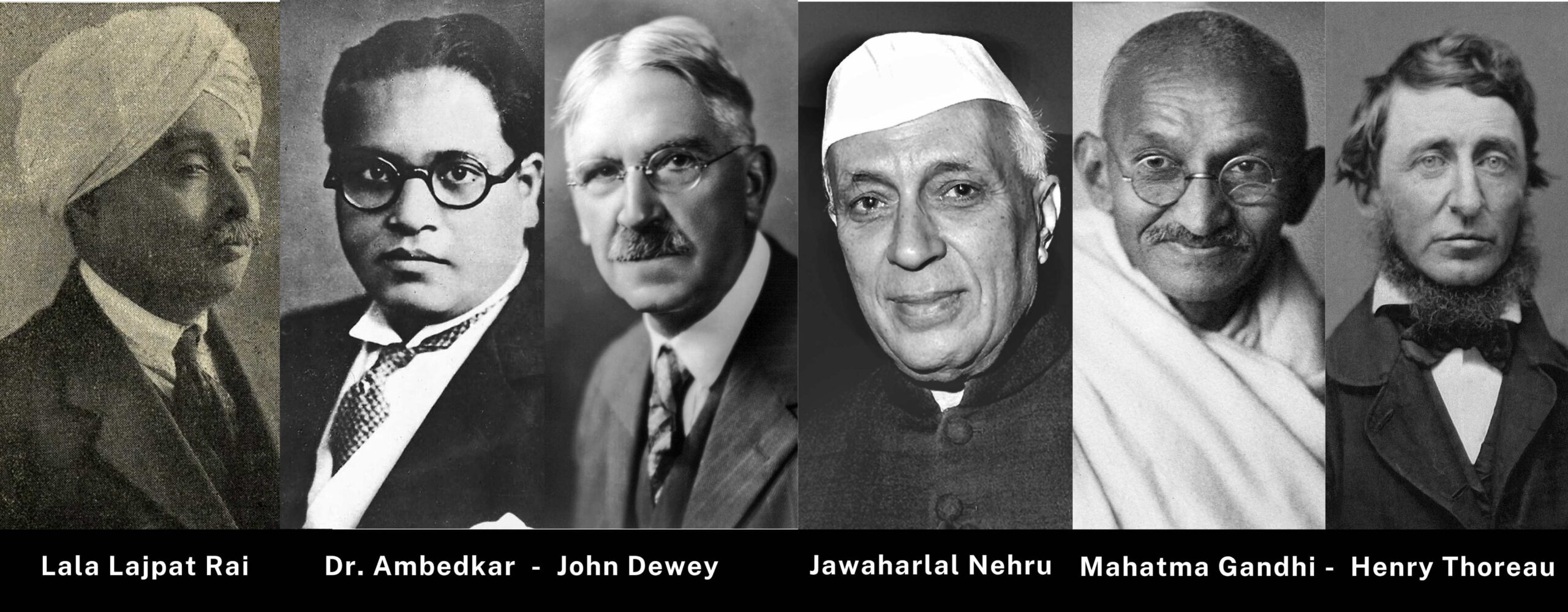
Lala Lajpat Rai was among the most prominent Indian leaders to engage deeply with the United States. During his years in America, especially between 1917 and 1920, he toured widely, speaking at universities, civic forums, and community organizations about the condition of India under colonial rule. His book The United States of America: A Hindu’s Impressions combined admiration for American democratic institutions with a sharp question: why did the principles of liberty and equality not extend to colonized peoples? While in the U.S., he helped found the Indian Home Rule League of America and built political networks that kept India’s demand for self‑rule before American audiences.
Other Indian revolutionaries also turned to the United States as a base for activism. Taraknath Das developed networks among students, activists, and immigrant communities and used his journal Free Hindustan to call for armed resistance to British rule, linking India’s struggle to wider debates about empire and racial hierarchy. Lala Har Dayal, who taught briefly at Stanford University, became a key founder and ideological leader of the Ghadar movement on the American West Coast, organizing Indian expatriate workers in the United States and Canada into a transnational campaign against colonial rule.
American intellectual traditions also shaped Indian thought more indirectly through literature and philosophy. Mahatma Gandhi, whose ethical and political ideas were rooted in Indian and religious traditions, nonetheless found reinforcement in Western writers, including Henry David Thoreau. Gandhi later noted that his satyagraha campaign in South Africa had already begun before he read Thoreau’s essay “Civil Disobedience,” but that the language of civil disobedience helped him explain aspects of the movement to English-speaking audiences. In Gandhi’s hands, the emphasis on conscience and resistance to unjust law was reworked into the disciplined, collective nonviolent struggle that became central to India’s freedom movement.
A parallel intellectual journey unfolded through Dr. B. R. Ambedkar’s experience at Columbia University. Studying economics, political theory, and sociology from 1913 to 1916, Ambedkar encountered American academic traditions that stressed critical inquiry and the protection of individual liberty through law. His engagement with John Dewey’s philosophy, especially the idea of democracy as a “way of life” grounded in equality, cooperation, and shared responsibility. profoundly shaped his conception of social democracy. Observing American debates over race and inequality, and reflecting on his own experience of caste oppression, strengthened Ambedkar’s conviction that political democracy must be anchored in social and economic justice. These commitments later informed the Indian Constitution’s emphasis on fundamental rights, equality, and enforceable remedies against discrimination.
Jawaharlal Nehru also engaged with global intellectual currents shaped in part by Western and American democratic thought. His Objectives Resolution of 1946 placed popular sovereignty, justice, liberty, and equality at the heart of India’s constitutional vision, while his later writings affirmed that democracy and freedom were universal principles that needed to be adapted creatively to India’s historical and social conditions.
These encounters were never simple, one‑way transfers of knowledge. Indian leaders did not merely absorb American ideas; they interpreted, challenged, and transformed them in response to colonial domination, caste hierarchy, racial exclusion, and mass political mobilization. The United States functioned both as a classroom and as a platform. a place where Indians could study democratic practices, criticize their failures, and refine their own visions of freedom. Through these interactions, an intellectual arc emerged from Philadelphia to Delhi, in which ideas of liberty, rights, and constitutional government crossed oceans, were reshaped by lived experience, and returned as powerful tools in one of the world’s largest democratic movements.
The Quest for India That Shaped a New World
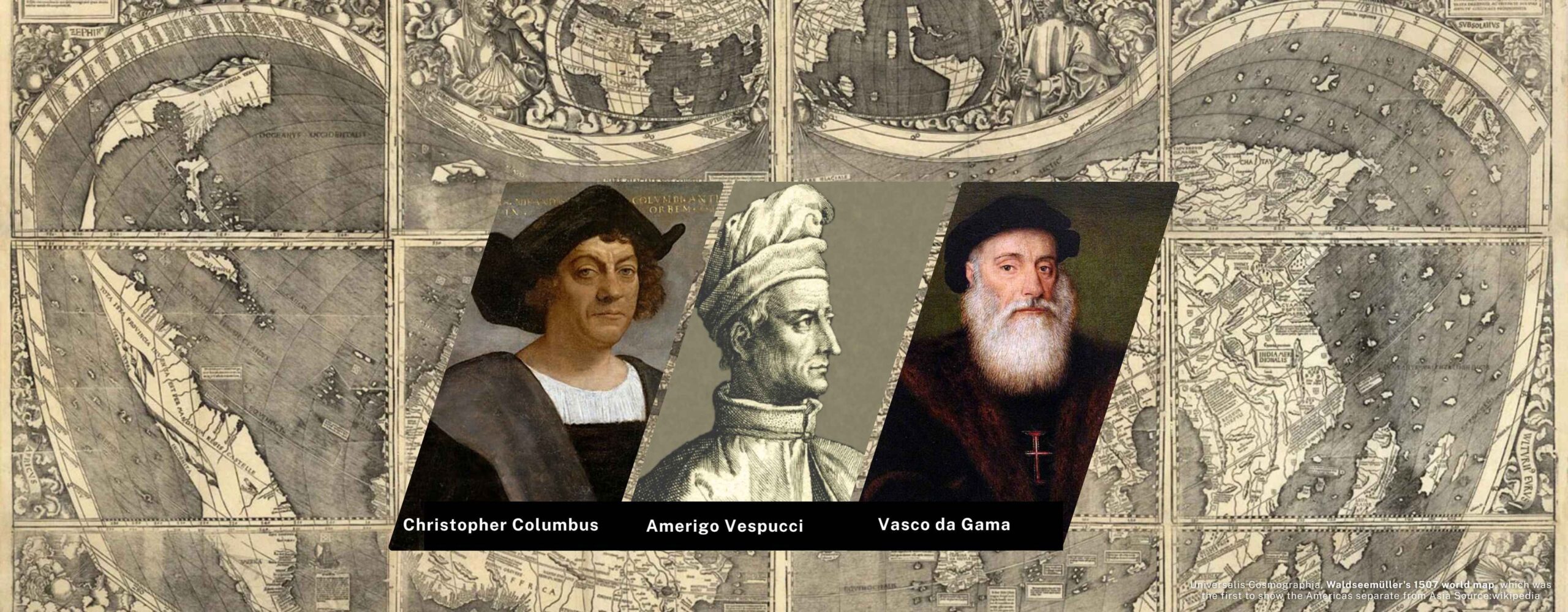
In the late fifteenth century, European maritime expansion was driven largely by the search for direct access to Asia’s wealth, especially the spices, textiles, and luxury goods associated with India. Political changes along traditional overland routes made those pathways more difficult and expensive, pushing European powers to look for new sea routes. In 1492, Christopher Columbus, sailing under the patronage of Spain’s Catholic monarchs Ferdinand II and Isabella I, set out westward to reach Asia and instead landed in the Caribbean, beginning sustained European contact with the Americas. A few years later, Amerigo Vespucci’s voyages along the eastern coast of South America helped show that these lands were not Asia but a separate continent; in 1507, German cartographer Martin Waldseemüller labeled this “America” on a widely circulated world map.
At roughly the same time, the Portuguese navigator Vasco da Gama reached Calicut (Kozhikode) on India’s southwestern coast in 1498, establishing a direct maritime route from Europe to Asia. This breakthrough permanently reshaped global trade, linking Europe, Africa, Asia, and, increasingly, the Americas through expanding oceanic networks. These voyages were part of intense competition among rising European powers such as Spain and Portugal, later joined by England, France, and others. The Treaty of Tordesillas of 1494, brokered by the papacy, attempted to divide newly explored territories between Spain and Portugal, highlighting the geopolitical stakes of overseas expansion.
Over time, these interconnected routes transformed global commerce. The movement of crops, animals, technologies, and diseases between continents, often called the Columbian Exchange, reshaped economies, environments, and societies across the world. Europe gained new sources of food and wealth, while Indigenous peoples in the Americas suffered catastrophic population loss from disease and conquest, alongside systems of forced labor and, later, the transatlantic slave trade.
The wealth generated through Atlantic and Indian Ocean trade strengthened European mercantile power and helped lay foundations for later industrial growth. It also encouraged new ways of thinking about commerce, government, and individual rights. European intellectual traditions gradually evolved, influenced by philosophers who emphasized natural rights, political consent, and limits on authority, ideas that would eventually undergird revolutionary movements.
By the eighteenth century, Britain’s North American colonies had developed distinct political and cultural identities within the empire. Conflicts over taxation, representation, and imperial authority intensified colonial demands for self‑government. In a world increasingly connected by centuries of exploration, trade, and exchange, the American Declaration of Independence was adopted in Philadelphia in 1776. Drawing on Enlightenment ideas and the principle that governments derive “their just powers from the consent of the governed,” it asserted the right of a people to determine their own political future and became one of the most influential political documents in modern history.
American Engagement with India’s Freedom Struggle
The American Who Joined India’s Independence
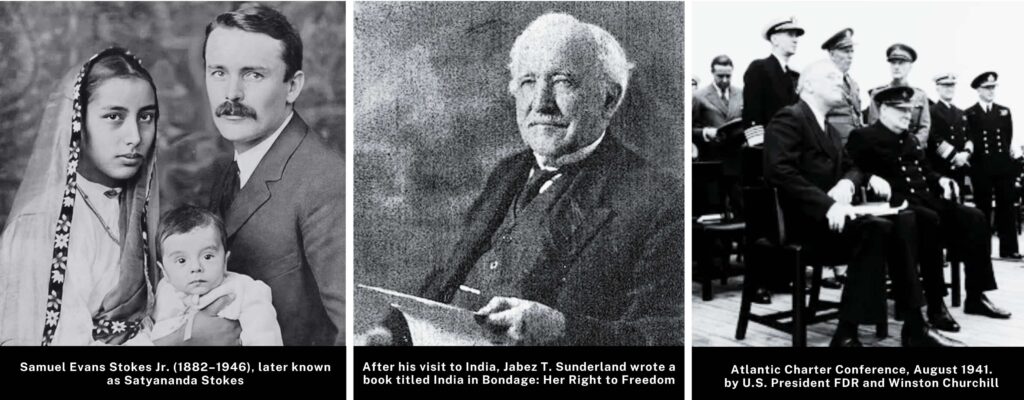
Samuel Evans Stokes Jr., born in Philadelphia, represents one of the most direct personal links between American society and India’s freedom struggle. Arriving in India in 1904 as a young American missionary worker, he gradually abandoned his missionary identity after deep engagement with Indian society and colonial realities. He adopted Indian customs, married locally, and became known as Satyanand Stokes.
Stokes later joined Gandhi’s Non-Cooperation Movement, aligning himself with India’s struggle against British rule. His participation in civil resistance led to his arrest in 1921 for sedition, making him one of the few Americans directly imprisoned for involvement in India’s independence movement. His life reflected a rare transition from American upbringing to active participation in anti-colonial resistance in India. symbolizing how democratic and moral ideas crossed national boundaries in practice, not just in theory.
An American Voice for India’s Independence
Jabez Thomas Sunderland, an American Unitarian minister, played an important intellectual role in bringing India’s independence question to American public discourse. After traveling in India during the early twentieth century, he became a vocal critic of British colonial rule.
His book India in Bondage presented a detailed account of political repression and argued that India’s demand for self-government was consistent with the same democratic principles America had embraced in 1776. Although his work was banned in colonial India, it circulated widely in reformist and academic circles abroad.
Sunderland used his position in American religious and intellectual networks to generate sympathy for India’s independence movement. His writings helped frame India’s struggle not as a regional issue but as part of a broader global question of liberty, justice, and political rights under empire.
Roosevelt, the Atlantic Charter, and Pressure on British Rule
During World War II, U.S. President Franklin D. Roosevelt played a subtle but important role in reshaping the global debate on colonialism. Alongside British Prime Minister Winston Churchill, he issued the Atlantic Charter in 1941, which declared that all peoples have the right to choose their form of government. Roosevelt interpreted this principle broadly and repeatedly urged that it apply to colonies under European rule, including India.
Although Churchill strongly resisted extending the Charter to the British Empire, Roosevelt continued to press for political reform and greater recognition of self-determination as a wartime principle. While the United States did not directly intervene in India’s freedom movement, American diplomatic pressure and ideological framing contributed to increasing international attention on colonial rule. This global shift helped place decolonization firmly within postwar political discourse.
A Free Society Coalition Event
The Declaration at 250: The Moral Ideas That Formed a Nation
Walter Isaacson and Jay Lapeyre in conversation, moderated by Daniel Erspamer
As part of the Civil Discourse Speaker Series, this conversation examines the ideas at the heart of the Declaration of Independence and their continuing relevance for American civic life. Together, Walter Isaacson and Jay Lapeyre explore how the founding principles that shaped the nation can still inspire independent thought, civil discourse, and shared purpose today.
Echoes of Freedom: America’s 250th Summit
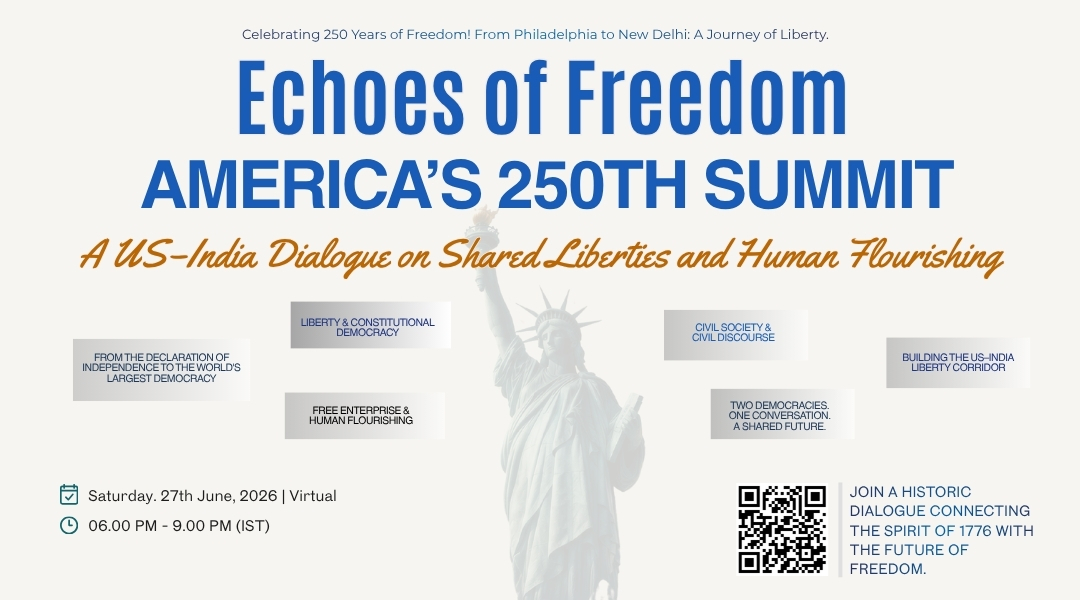
A US–India Dialogue on Shared Liberties and Human Flourishing
Join us for a high-impact virtual summit marking America’s 250th anniversary and exploring the enduring relevance of liberty, constitutionalism, free enterprise, and human flourishing in the US and India.
Co-hosted by the Free Society Coalition and the Swatantrata Center, this 1-day summit will bring together leading American and Indian thinkers, policymakers, and public intellectuals for a dynamic series of conversations on the ideas that shape free societies. The program will examine how the spirit of 1776 resonates with India’s constitutional democracy today and how both nations can build a stronger future through civil discourse, institutional reform, and open markets.
Date: Saturday, June 27, 2026 Time: 6:00 PM – 9:00 PM IST Format: Virtual Summit
The summit will feature keynote conversations, moderated panels, and audience Q&A with distinguished speakers from the US and India. Topics will include constitutional literacy, democratic governance, economic freedom, and the future of the US-India Liberty Corridor.
This event is ideal for students, young professionals, academics, policy thinkers, and anyone interested in the future of freedom and democracy.
Speakers

President Emeritus of FEE, Humphrey Family Fellow. Grounding the panel in the foundational values of the Philadelphia Declaration and historical liberty.

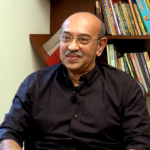
Author and public intellectual; former CEO of Procter & Gamble India. Bringing India’s liberal political-economy perspective, the evolution of economic reforms, and the intellectual roots of freedom and prosperity in the Indian context.
Gunnam Gangaraju
Moderator:
An acclaimed Indian producer and director in Telugu cinema; creator of the iconic sitcom Amrutham. His novel Vihangam reflects free-market and individualist liberal principles. He moderates the panel, bringing a creative storyteller’s perspective on individualism and freedom in India.

CEO of Laitram LLC, board chair for the Cato Institute & Atlas Society. Bringing private sector expertise on how free enterprise directly uplifts human dignity.

CEO Emeritus of State Policy Network (SPN). Providing a masterclass on how to build localized think-tank ecosystems and execute the "Liberty Corridor."

Yash Agarwal
Moderator:
Founder of Public Policy India (PPI), India’s largest pan-India policy and social impact community with over 150,000 members across 20 cities. He is a manager in global stakeholder engagement at ICANN and previously served at Twitter India and the Indian Parliament (LAMP Fellowship).
Join a historic dialogue connecting the spirit of 1776 with the future of freedom. Register now to be part of this landmark conversation and receive updates, session access details, and post-event resources.
We unite to promote a vibrant, exciting, life-affirming future where liberty and personal responsibility thrive.
The Founders who wrote the Declaration of Independence exemplified civil discourse and unity of purpose despite their political and religious differences. Emulating their example, we at Free Society Coalition elevate our shared humanity and ethics above the differences to bridge the gap between ideas and action. We call on you to amplify our voices to unite to champion individual freedom, and responsibility.
It is in the spirit of America’s founding almost 250 years ago, that we have begun a more conscious effort, focusing on common ethics upstream of political issues, beginning with our own: Philadelphia Declaration. Want to join us in cutting through the chaos?